


Best Brothels



Best Escort Agencies



Best Cam Sites



In Austria, the regulation of brothels is a complex subject governed by both federal and regional laws. Understanding what makes a brothel legal in Austria involves exploring the legal framework, health regulations, licensing requirements, and the rights of sex workers.
This article offers a comprehensive overview of the essential elements that define a legal brothel in Austria, providing clarity for business owners, workers, and clients alike.

Legal Framework Governing Brothels in Austria
Prostitution in Austria is legal and regulated, but the operation of brothels is subject to stringent rules. The core legislation stems from the Prostitution Act (Prostitutionsgesetz), which provides the basis for licensing and operational standards. However, each federal state (Bundesland) in Austria enacts its own specific regulations, which means that the details can vary significantly between regions such as Vienna, Tyrol, or Salzburg.
The law aims to balance public health, safety, and order with the rights and freedoms of sex workers and business operators. It prohibits illegal activities such as human trafficking and exploitation while allowing sex work under controlled conditions.
Licensing Requirements for Legal Brothels Austria
One of the most important criteria for a brothel to be considered legal in Austria is the possession of an official license or permit. Obtaining this license requires adherence to several conditions:
- Application Process: Brothel owners must apply through the local municipal authority. This involves submitting detailed documentation about the premises, ownership, and intended operations.
- Location Restrictions: Many municipalities enforce zoning laws that restrict brothel locations to specific areas, often away from schools, churches, or residential neighborhoods.
- Building Standards: Licensed brothels must meet health, safety, and fire regulations. The premises should be suitable for the activities conducted, ensuring privacy and security for workers and clients.
- Criminal Background Checks: Operators and sometimes workers undergo checks to prevent individuals with criminal records related to exploitation or trafficking from participating in the business.
Failure to comply with these licensing requirements means the brothel is operating illegally and can face fines, closure, or criminal charges.
Health and Safety Regulations
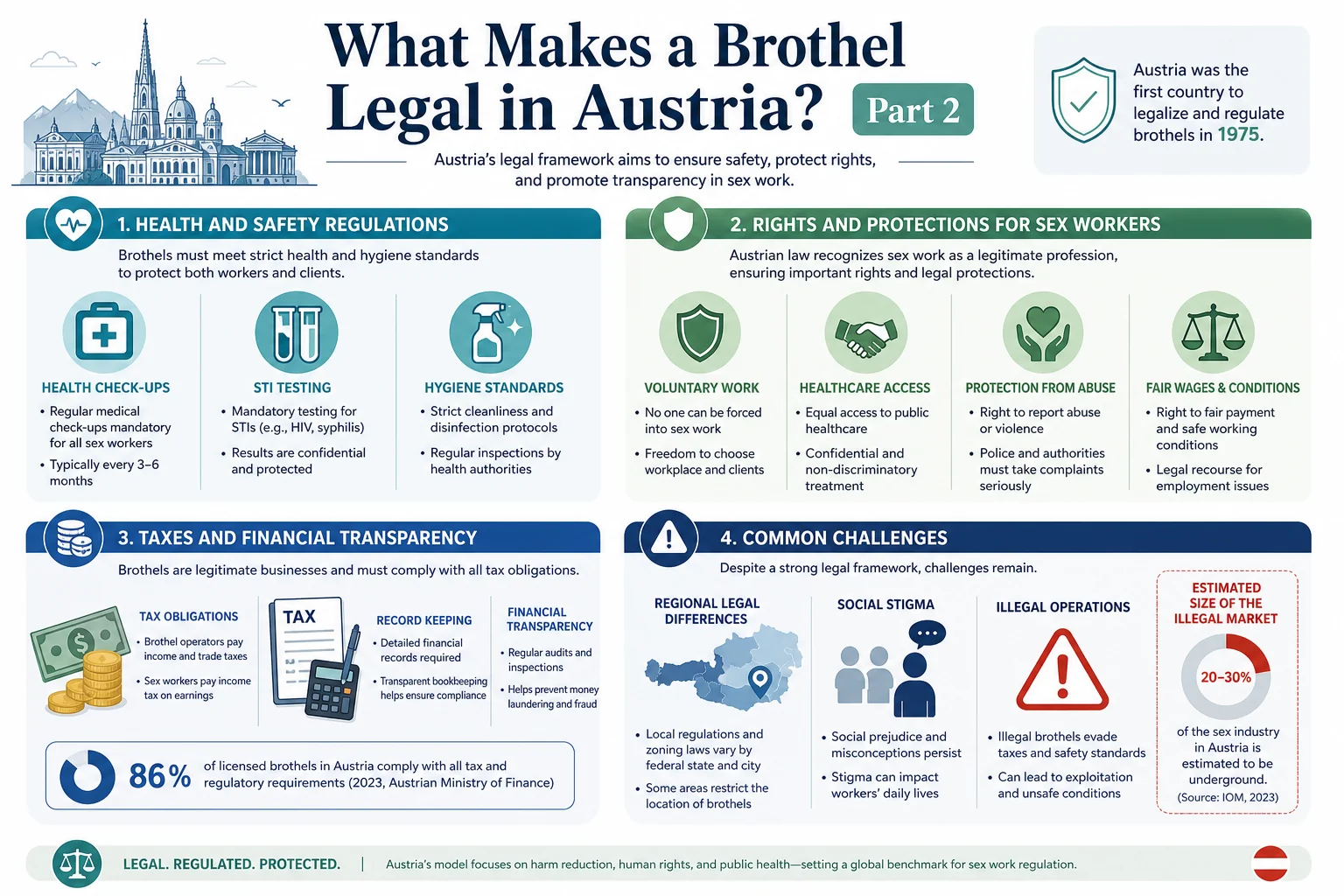
A key aspect that makes a brothel legal in Austria is adherence to strict health and safety protocols. The government prioritizes the physical well-being of sex workers and their clients by enforcing regular health check-ups and hygienic working conditions.
Sex workers in legal brothels are required to register with local health authorities and undergo routine medical examinations, including tests for sexually transmitted infections (STIs). These measures help reduce the spread of diseases and ensure that the environment remains safe for all parties involved.
Additionally, brothels must maintain clean and sanitary facilities. This includes regular cleaning schedules, provision of condoms and lubricants, and ensuring that rooms are well-ventilated and secure.

Rights and Protections for Sex Workers
Legal brothels in Austria operate under a framework that grants sex workers several rights and protections. This legal recognition helps reduce stigma and exploitation, promoting safer working conditions.
Sex workers in licensed establishments have the right to:
- Work voluntarily without coercion
- Access health care and social services
- Report abuses or exploitation without fear of legal repercussions
- Receive fair wages and work under regulated conditions
Furthermore, legal brothels often provide support systems such as counseling and access to legal advice, which contribute to the overall safety and well-being of the workers.
Taxes and Financial Transparency
Operating a legal brothel in Austria also involves financial transparency and tax compliance. Brothel owners are required to register their business for tax purposes and declare their income accordingly. This financial regulation helps discourage illegal money flows and ensures that operators contribute to the public economy.
Clients and workers also benefit from this transparency, as it fosters a legitimate marketplace where transactions are recorded and protected under law.
Common Challenges in Maintaining Legality
Despite clear regulations, brothel operators in Austria often face challenges in maintaining compliance. Regional differences in laws can cause confusion, especially for businesses operating near borders of federal states.
Additionally, social stigma and local opposition sometimes lead to political pressure to restrict or close down brothels. Operators must stay informed about changes in legislation and community attitudes to avoid legal pitfalls.
Illegal operations remain a problem in some areas, with unlicensed brothels posing risks such as exploitation, trafficking, and unsafe working conditions. Authorities actively monitor and shut down such establishments to protect workers and uphold the law.
Conclusion
Understanding what makes a brothel legal in Austria requires awareness of the licensing procedures, health and safety requirements, worker rights, and financial regulations. Legal brothels operate within a structured framework designed to protect all parties involved while ensuring public order and health. For anyone involved in the industry, staying informed and compliant with the laws is crucial to operating legally and ethically.
Whether you are a business owner, sex worker, or client, recognizing the importance of these regulations helps support a safer and more transparent environment in the Austrian sex industry.