


When discussing the safety of sex work, a critical question often arises: are brothels safer than street prostitution? This topic is especially relevant in countries like Austria, where prostitution is legal and regulated under specific conditions.
Understanding the safety dynamics between brothels and street prostitution requires examining legal frameworks, working conditions, health measures, and social factors. This article delves into these aspects to shed light on why Austrian brothels tend to offer a safer environment compared to street-based sex work.

Legal Framework Surrounding Prostitution in Austria
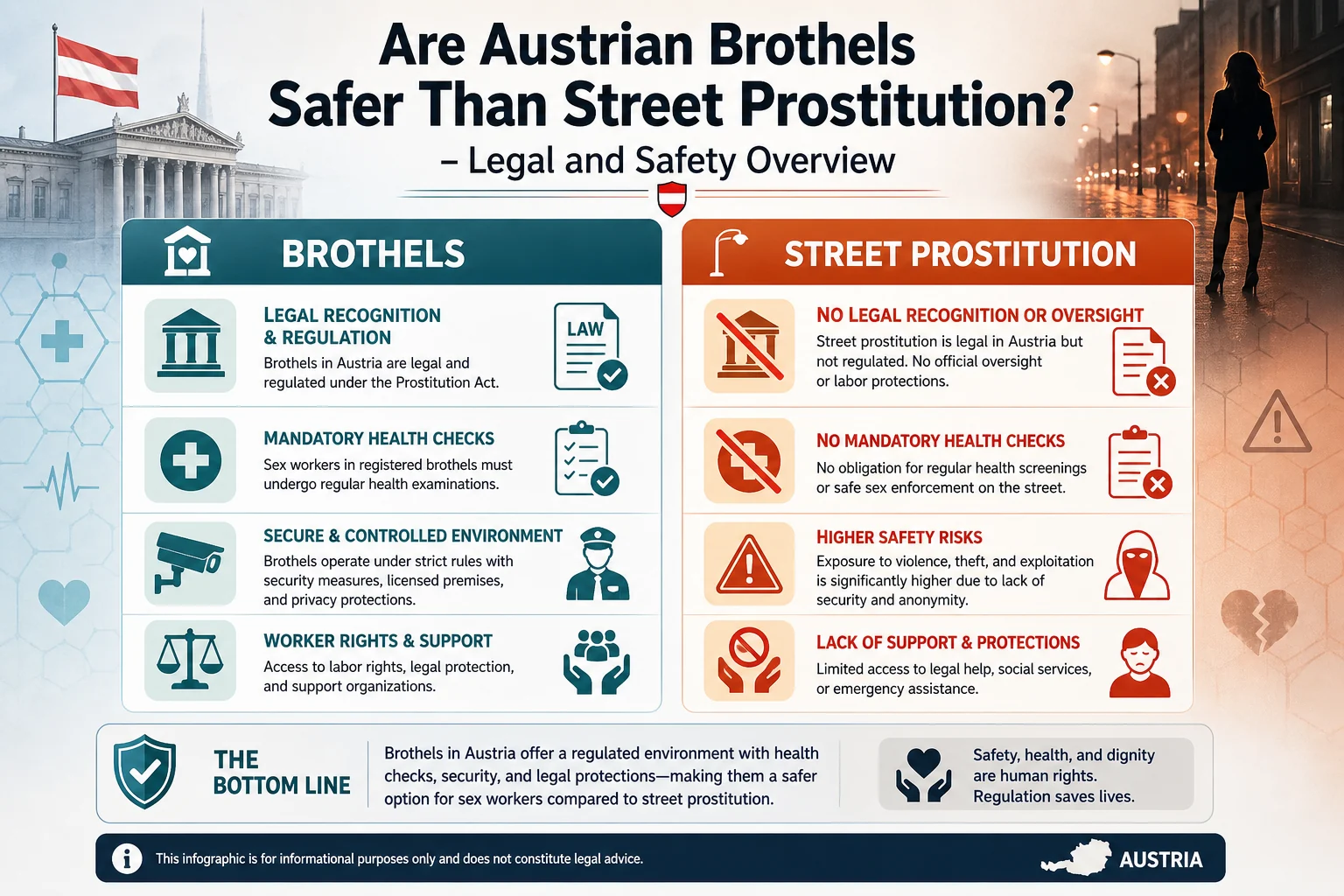
Austria has a distinctive legal approach to prostitution, recognizing it as a legal profession under regulated circumstances. Brothels operate legally and must comply with strict regulations, including health checks, licensing, and safety protocols mandated by local authorities. In contrast, street prostitution often falls into a gray area, with stricter enforcement against illegal solicitation or unlicensed activity.
This legal recognition of brothels provides a foundation for safer working environments. Licensed brothels are subject to inspections and must adhere to hygiene standards, ensuring that sex workers operate in controlled settings. Street prostitution, lacking such oversight, is more vulnerable to exploitation and unsafe conditions.
Controlled Environment in Austrian Brothels
One of the main reasons brothels are considered safer is the controlled environment they provide. Brothels in Austria typically have security personnel, surveillance systems, and emergency protocols in place. These measures help prevent violence and harassment, which are unfortunately prevalent risks in street prostitution.
Furthermore, brothels often have clear rules about client behavior and worker boundaries, supported by management. This structure reduces the likelihood of dangerous encounters and helps sex workers feel more secure during their shifts. The presence of colleagues and supervisors also means that help is readily available when needed.
Health and Safety Measures
Health is a paramount concern in the sex industry. Austrian brothels are required to facilitate regular health check-ups for sex workers, including screenings for sexually transmitted infections (STIs). This proactive health management helps prevent the spread of diseases and ensures that both workers and clients are protected.
In contrast, street prostitution often lacks access to such comprehensive health services. Sex workers operating on the streets may face barriers to healthcare, including stigma, fear of law enforcement, and unstable living conditions. Without regular testing and medical support, health risks increase significantly.
Financial Stability and Support Networks
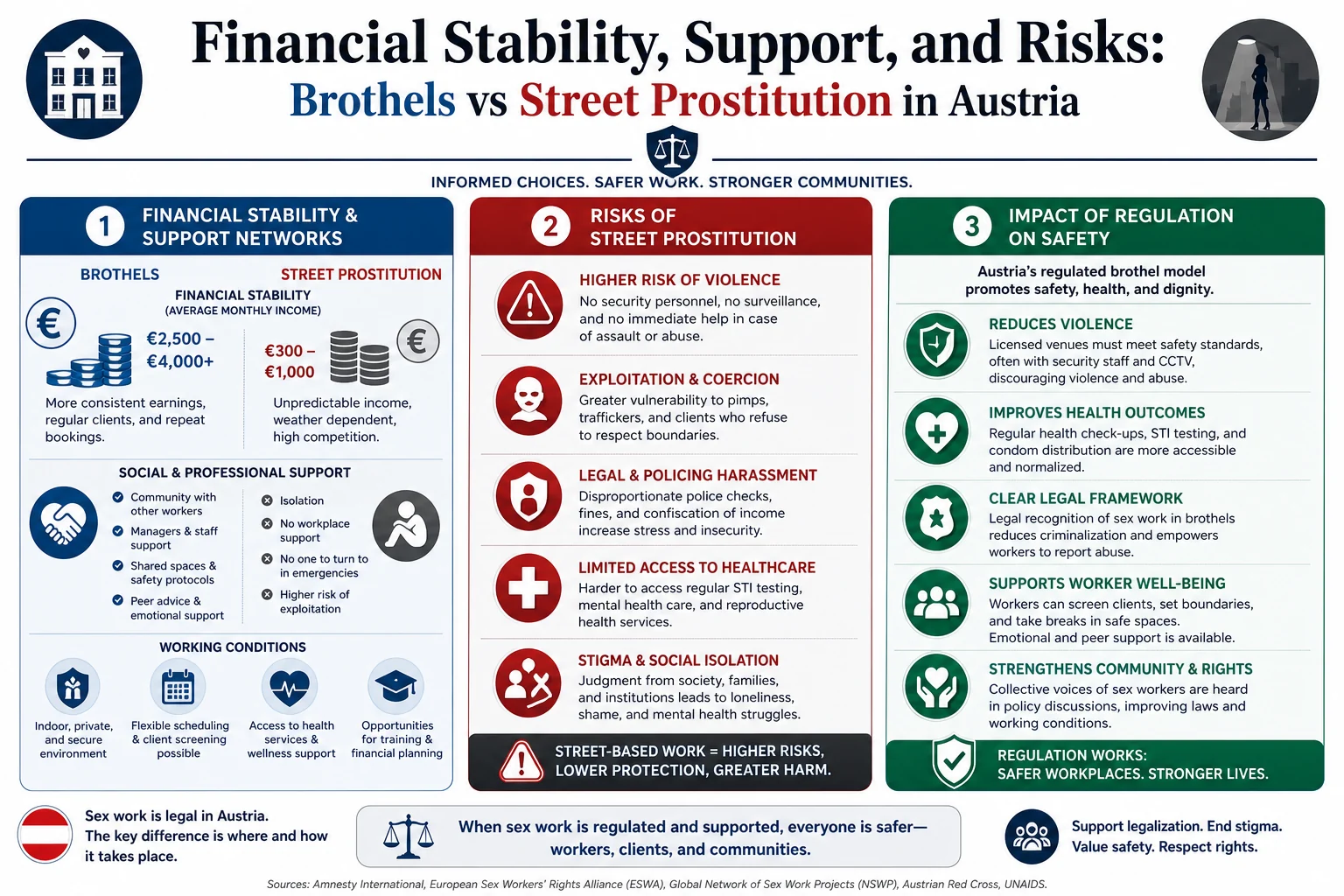
Brothels offer a more financially stable environment for sex workers. With an established client base and regulated pricing, workers can often avoid the uncertainties and risks associated with soliciting clients in public spaces. This stability allows them to focus on their safety and well-being rather than constantly negotiating terms or avoiding dangerous situations.
Additionally, brothels often foster a sense of community among workers. This social support network is crucial for emotional well-being and practical assistance, such as sharing safety tips or intervening in emergencies. Street-based sex workers, on the other hand, may experience isolation, increasing their vulnerability to abuse and exploitation.
Risks Associated with Street Prostitution
Street prostitution inherently carries higher risks due to its unregulated nature. Sex workers on the street are more exposed to violence from clients, passersby, and even law enforcement. The lack of a controlled environment means that help is not always immediately available.
Moreover, street prostitution is often linked to greater social stigma and criminalization. This can prevent sex workers from reporting crimes or seeking medical help, further exacerbating their vulnerability. The transient nature of street work also makes it harder to establish consistent safety routines or access support services.
Impact of Regulation on Safety
The regulation of brothels in Austria aims to create a balance between allowing sex work and protecting the rights and safety of sex workers. By enforcing licensing, health checks, and security measures, authorities help reduce the risks associated with prostitution.
While regulation is not a perfect solution and challenges remain—such as ensuring all brothels comply with standards and addressing the needs of marginalized workers—it undeniably contributes to safer working conditions compared to unregulated street prostitution.
Conclusion: Why Austrian Brothels Are Generally Safer
In summary, Austrian brothels tend to be safer than street prostitution due to several factors: legal recognition and regulation, controlled environments with security measures, access to health services, financial stability, and social support networks. These elements work together to reduce the risks of violence, health issues, and exploitation commonly associated with street-based sex work.
While no work environment is entirely risk-free, the structured nature of brothels in Austria offers sex workers a greater degree of protection and well-being. For those concerned about safety in the sex industry, understanding these differences is crucial in supporting policies and practices that prioritize the health and security of all workers.