


Best Brothels



Best Escort Agencies



Best Cam Sites



Prostitution laws in Austria have a unique structure that balances regulation with protection for those involved in the sex industry. Understanding the legal framework around prostitution in Austria is essential, whether you’re a resident, a visitor, or someone interested in comparative legal systems. T
his article breaks down the key elements of Austria’s prostitution laws, offering a comprehensive overview of what is legal, what is prohibited, and how the government manages this complex sector.

Overview of Prostitution Laws in Austria
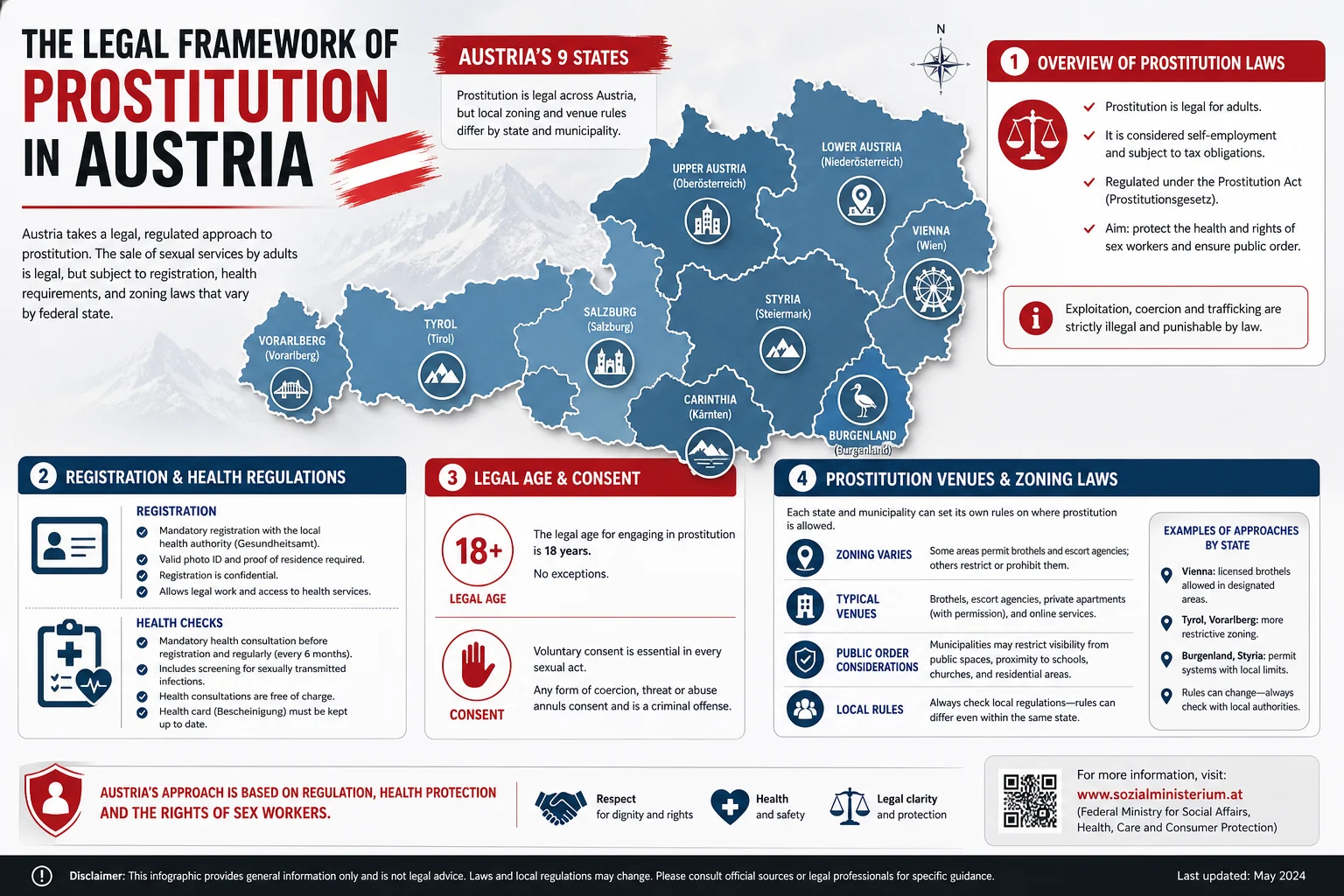
Prostitution is legal and regulated in Austria, but the laws vary by region due to the country’s federal structure. Each of Austria’s nine states (Bundesländer) has the authority to set specific regulations, which means the rules can differ significantly depending on where you are. However, some core principles apply nationwide, such as the requirement for sex workers to register and undergo regular health checks.
The Austrian approach is grounded in harm reduction and public health, aiming to protect sex workers while controlling illegal activities often linked to prostitution, such as human trafficking and exploitation.
Registration and Health Regulations
One of the most important aspects of prostitution laws in Austria is the mandatory registration of sex workers. To work legally, individuals must register with local authorities, which involves providing identification and undergoing medical examinations. These health checks are designed to prevent the spread of sexually transmitted infections (STIs) and ensure that sex workers receive regular health support.
Failure to register can result in fines or other penalties. Registered sex workers are issued a license or permit, which they must carry while working. The registration process also helps authorities monitor the industry and combat illegal activities.
Legal Age and Consent in Prostitution
In Austria, the legal age for prostitution is 18 years old. Engaging in sex work below this age is strictly illegal and treated as a form of exploitation or trafficking. Consent is a fundamental aspect, and all parties involved must be adults who freely agree to participate in the transaction.
Authorities impose strict penalties on anyone who coerces or forces individuals into prostitution, emphasizing the protection of vulnerable groups. This is part of Austria’s broader commitment to human rights and combating trafficking networks.
Prostitution Venues and Zoning Laws
The regulation of where prostitution can take place is a key part of the legal framework. Many Austrian cities have designated zones where sex work is allowed, often referred to as “red-light districts.” These areas are monitored by the police and local authorities to ensure safety and compliance with the law.
Brothels and other commercial establishments must also comply with local zoning laws, which can include restrictions on location, hours of operation, and hygiene standards. In some regions, street prostitution is permitted under certain conditions, while in others, it may be restricted or banned.
Taxation and Social Benefits
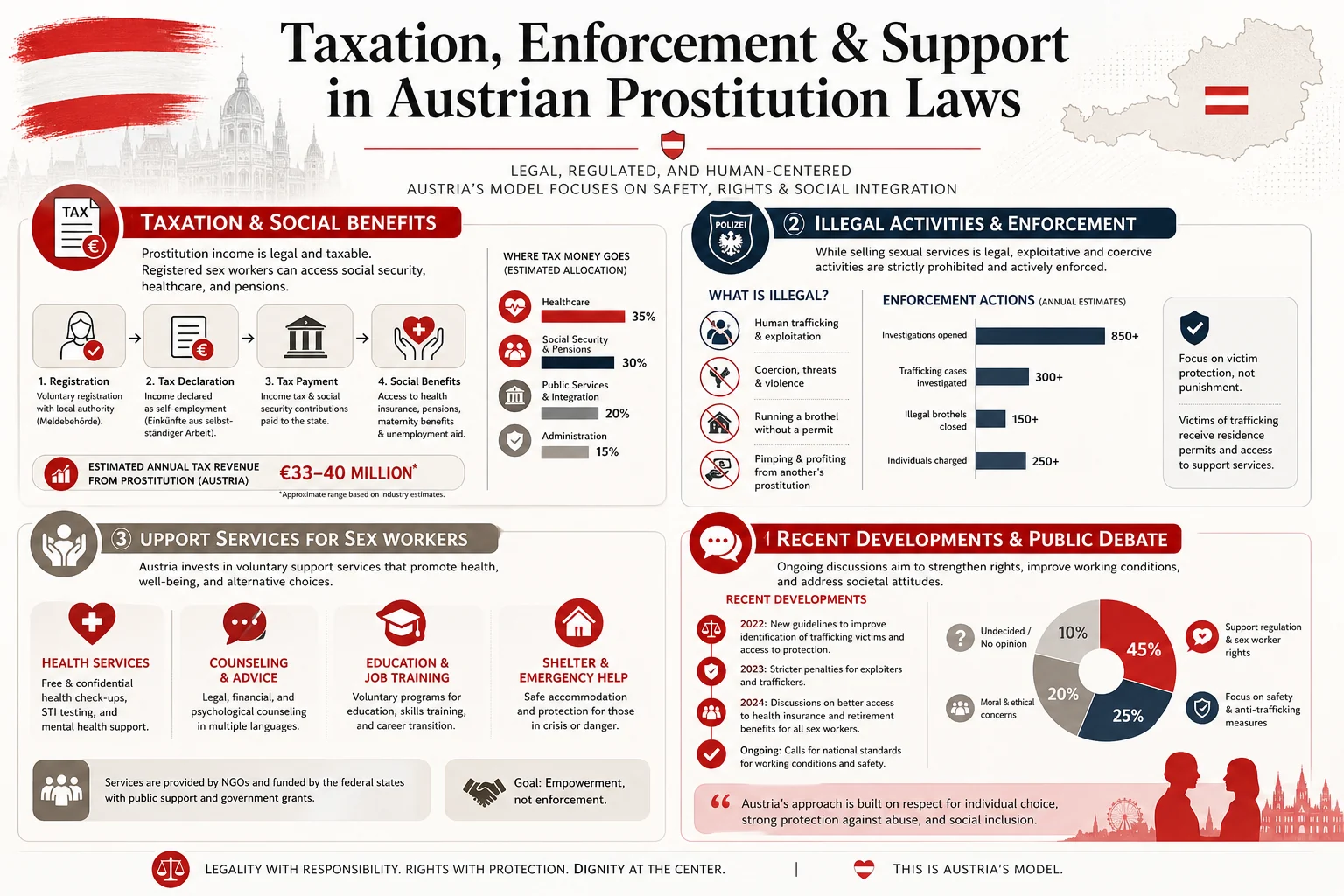
Sex workers in Austria who are registered and working legally are subject to taxation like any other self-employed individuals. They pay income taxes and social security contributions, which entitle them to benefits such as health insurance and pensions. This formal recognition helps integrate sex workers into the social security system, providing a degree of financial security.
The taxation system also reinforces the legitimacy of legal prostitution and helps fund public services related to health and safety in the industry.
Illegal Activities and Enforcement
While prostitution itself is legal, many associated activities remain illegal under Austrian law. These include pimping, human trafficking, exploitation, and operating unlicensed brothels. Law enforcement agencies actively target these crimes to protect sex workers and uphold public order.
Authorities also crack down on illegal prostitution, which often operates underground without registration or health checks. Such activities pose significant risks to sex workers and the community, as they are linked to crime and exploitation.
Support Services for Sex Workers
Austria provides various support services for sex workers, including health clinics, counseling, and legal assistance. NGOs and government programs work together to ensure that sex workers have access to resources that promote their well-being and safety.
These services emphasize voluntary participation and confidentiality, aiming to empower sex workers to make informed decisions about their lives and work. Support programs also play a crucial role in helping those who wish to leave the industry.
Recent Developments and Public Debate
The prostitution laws in Austria have evolved over time, reflecting changing social attitudes and policy priorities. Public debate often centers on balancing regulation with individual freedom, protecting vulnerable persons, and addressing issues such as trafficking and exploitation.
In recent years, there has been increased focus on improving working conditions for sex workers and strengthening measures against trafficking. Some regions have introduced new regulations to tighten controls, while others have emphasized harm reduction and support services.
Conclusion
Prostitution laws in Austria present a model of legalized and regulated sex work that prioritizes health, safety, and human rights. While prostitution itself is legal, it is closely monitored through registration, health checks, zoning laws, and taxation. Illegal activities related to prostitution are strictly prohibited and actively prosecuted.
Understanding these laws is crucial for anyone involved in or studying the sex industry in Austria. By combining regulation with support and enforcement, Austria aims to create a safer environment for sex workers and reduce the negative consequences often associated with prostitution.