


Best Brothels



Best Escort Agencies



Best Cam Sites



The idea of the FKK vienna scene often raises expectations shaped by Germany’s famous wellness-style adult venues. In cities like Frankfurt or Cologne, large-scale FKK clubs became a recognizable format: spacious interiors, flat-rate entry systems, and a semi-open marketplace between guests and workers.
Yet when visitors look for a comparable Vienna sauna club, they quickly notice something different. Despite multiple attempts over the years, the classic German saunaclub concept has never truly taken root in Austria’s capital.
Understanding why requires a closer look at how Vienna’s market actually works — and how it differs from Germany in key structural ways.
Market Size and Demand Dynamics
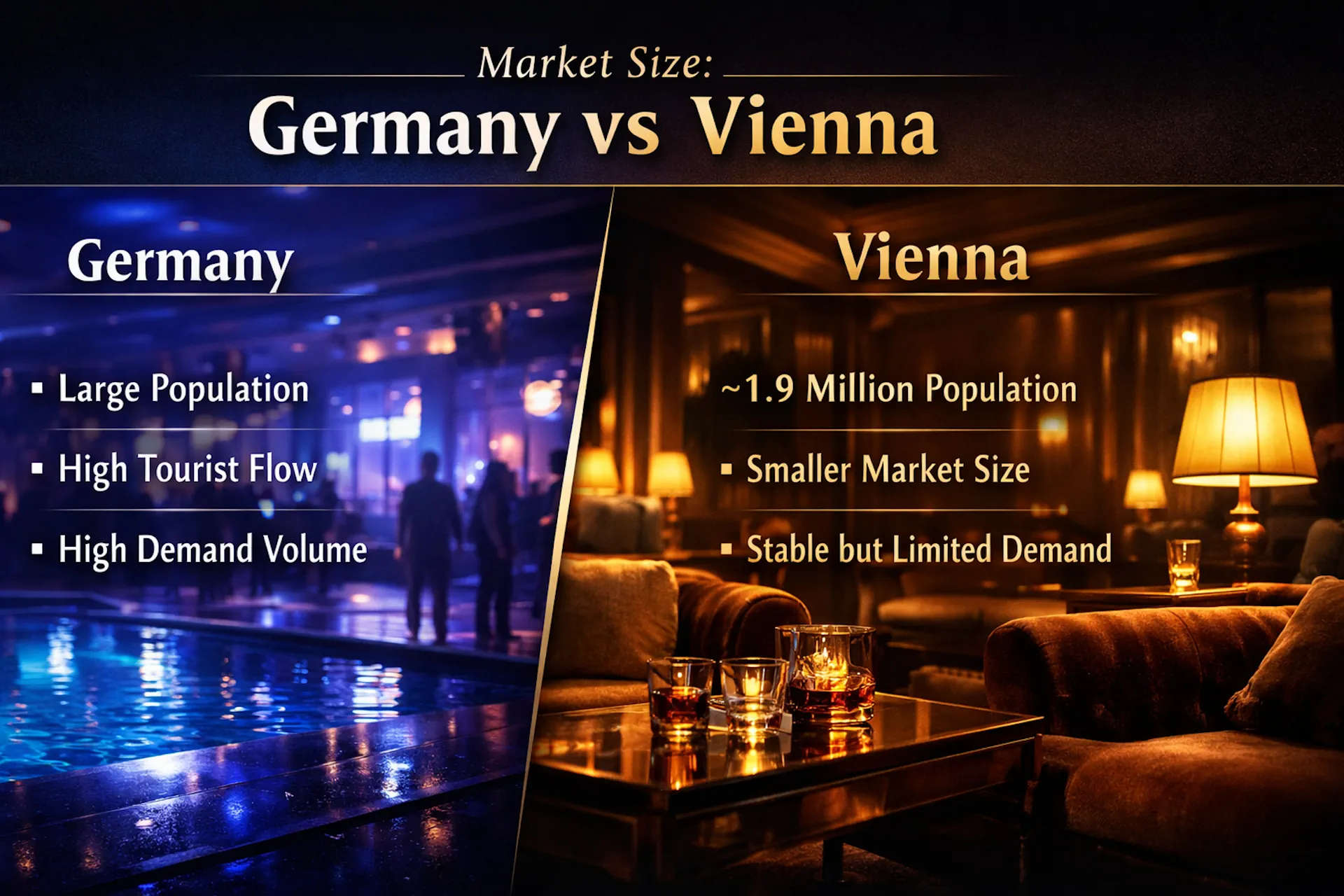
One of the most overlooked factors in the FKK Germany vs Austria comparison is simple economics: scale.
Germany’s largest cities support a significantly higher volume of domestic and international visitors. This constant flow makes it viable to operate large venues that depend on high turnover and continuous foot traffic. The FKK concept relies heavily on this dynamic — without it, the model becomes difficult to sustain.
Vienna, while vibrant and internationally connected, operates on a different level. With a population under two million, the city’s demand is more stable but less mass-oriented. This has a direct impact on the feasibility of large-format FKK club Vienna venues, which require a steady stream of guests to remain profitable.
Instead of high-capacity environments, Vienna has evolved toward more curated, smaller-scale experiences that match its actual demand structure.
Pricing Transparency vs. Flat-Rate Illusion
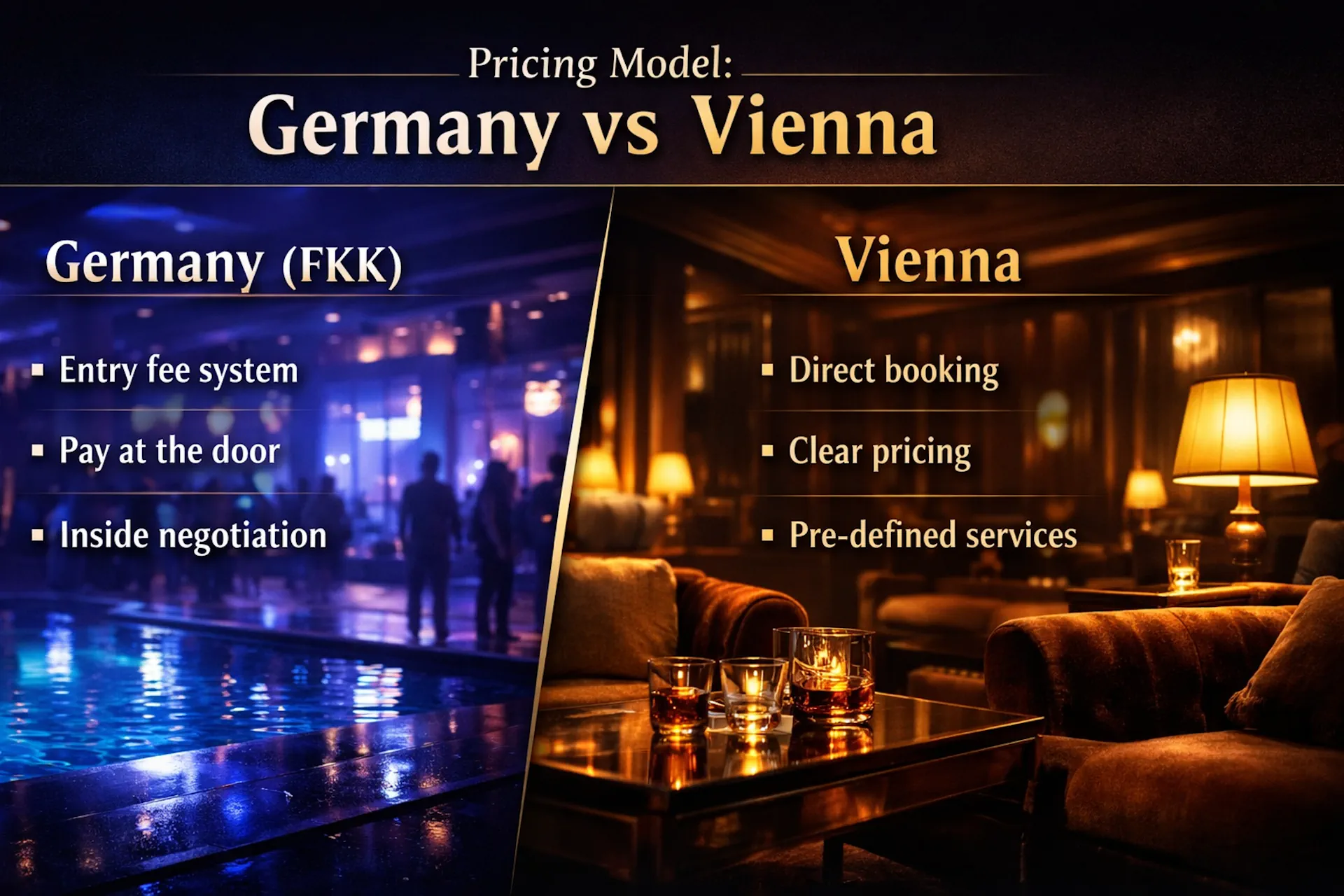
At first glance, the traditional saunaclub pricing model appears simple: one entry fee covers access, with additional services arranged inside. This approach is common in German venues and often associated with the saunaclub Wien search intent.
However, the reality can be more complex. Because individuals operate independently within these venues, pricing is not always standardized. This can lead to inconsistencies between expectations and actual experiences.
In Vienna, clients tend to prefer clarity from the outset. Transparent agreements, clearly defined services, and direct arrangements are valued more highly than bundled entry concepts. As a result, the flat-rate system — central to many FKK venues — does not align well with local expectations.
This difference in consumer behavior is one of the key reasons why the model struggles to gain traction.
Legal Structure and Regulatory Framework
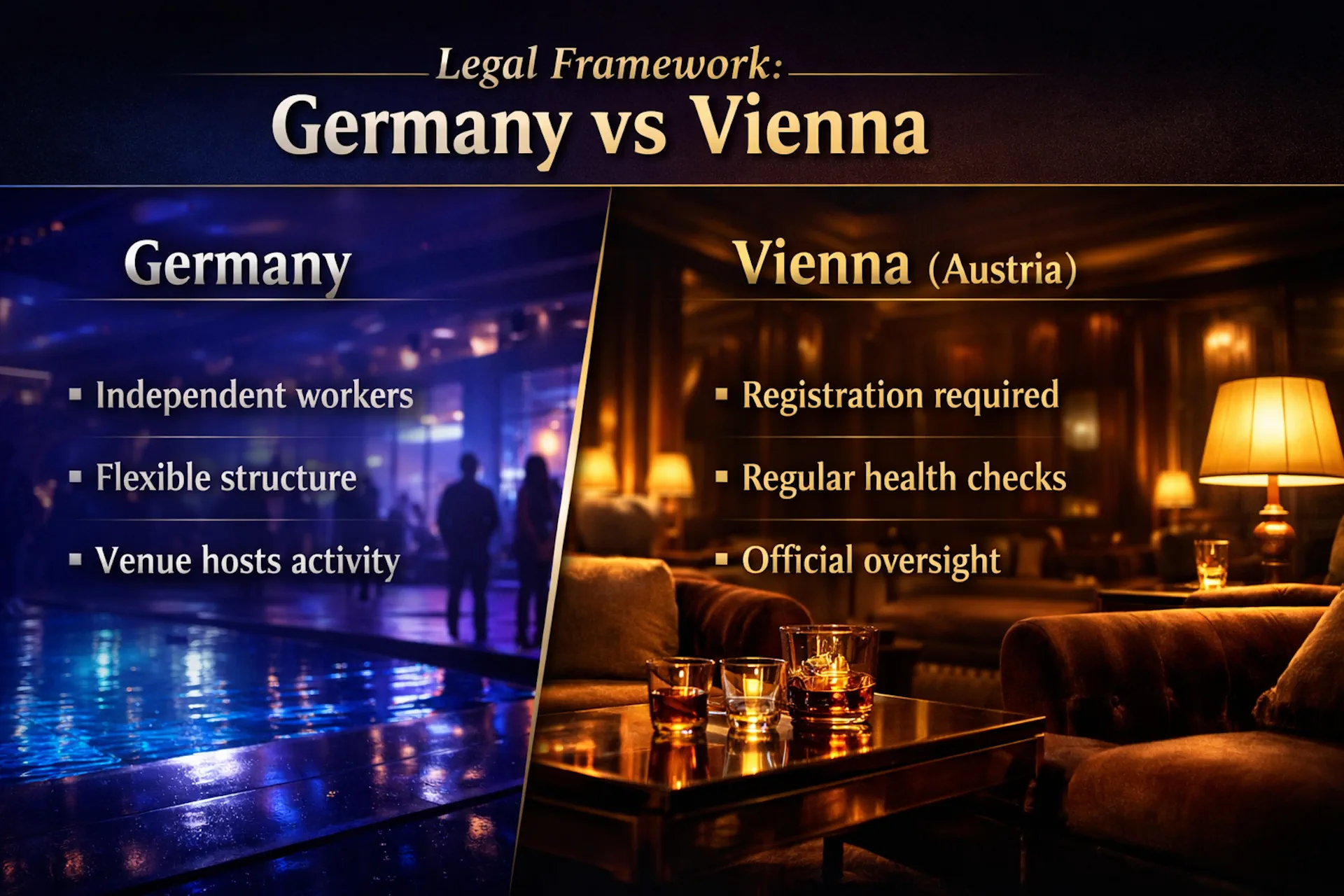
Another critical distinction lies in regulation. Austria maintains a structured and closely monitored legal environment for adult services. Registration requirements, health checks, and documentation are all part of the system.
This creates challenges for the traditional FKK format. The concept of independently operating individuals within a shared venue introduces grey areas that are more difficult to reconcile with Austrian compliance standards.
Operators in Vienna typically prefer business models where responsibilities and roles are clearly defined. This reduces legal risk and ensures alignment with local regulations — an important factor in a market where oversight is taken seriously.
For anyone exploring a Vienna brothel guide, this regulatory clarity is often reflected in how venues are structured and presented.
Operational Control and Service Consistency
One of the defining features of the FKK concept is decentralization. Individuals set their own terms, which can create a diverse and flexible environment. While this works in high-volume markets, it also reduces the level of control that venue operators can maintain.
In Vienna, consistency plays a much larger role. Quality standards, hygiene, communication, and overall experience are expected to be predictable and professionally managed.
This preference has shaped the local industry toward models where management oversight is stronger. Instead of open-market dynamics, Vienna’s venues often emphasize structured service delivery and clearly defined expectations.
From a business perspective, this approach supports long-term reputation building — something that is particularly important in a smaller, more reputation-driven market.
Cultural Expectations and Client Behavior
Cultural context also plays a significant role in how different models perform. The German FKK concept developed over decades, shaped by local attitudes toward wellness, openness, and leisure culture.
Vienna, by contrast, combines tradition with a more reserved social dynamic. Clients often prioritize discretion, professionalism, and efficiency over exploratory or open-ended experiences.
This difference influences how services are designed and delivered. While the saunaclub model encourages browsing and spontaneous interaction, Vienna’s audience tends to favor more direct and structured arrangements.
As a result, the classic FKK environment feels less aligned with local expectations, even for international visitors.
Conclusion
The limited success of the FKK Vienna concept is not due to a single issue, but rather a combination of factors. Market size, pricing expectations, legal frameworks, operational control, and cultural preferences all contribute to the outcome.
While the German model remains successful in its original context, it does not translate seamlessly to Vienna. Instead, the city has developed its own approach — one that emphasizes clarity, regulation, and consistent quality.
For visitors comparing options across Europe, understanding these differences is essential. Vienna offers a distinct experience shaped by its own standards, rather than a direct replication of the FKK model.