


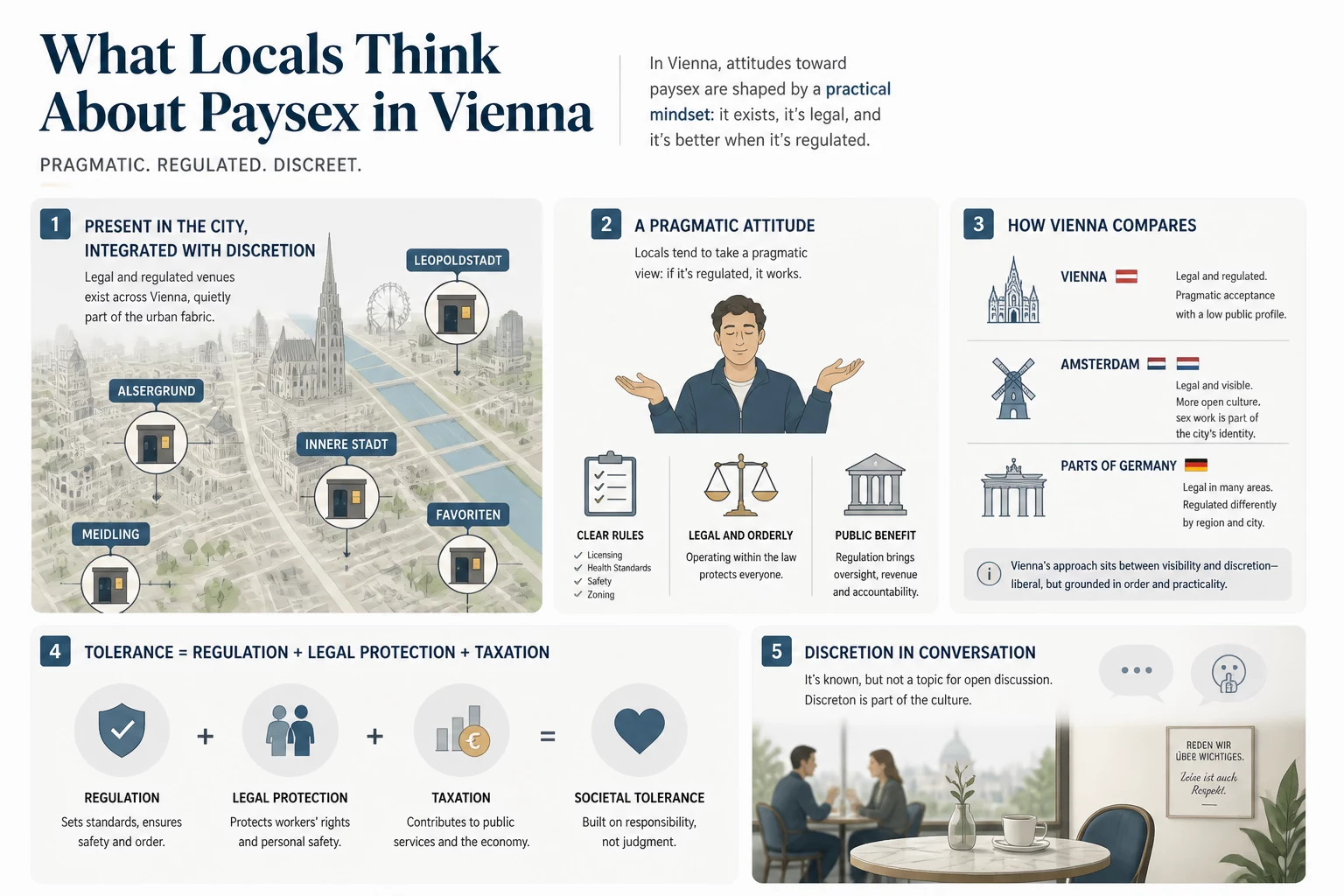
Vienna has earned a reputation as one of Europe’s more liberal cities regarding adult entertainment, and this reputation reflects decades of legal, regulated sex work. The broader Viennese population tends to view it with pragmatism similar to Amsterdam or parts of Germany. It’s not celebrated in polite conversation, but neither is it treated as a shameful secret or urban blight.
This pragmatic stance reveals something deeper about Vienna’s character. The city prefers working solutions to moral grandstanding. Sex workers pay taxes, follow health regulations, and operate in licensed, inspected venues. Locals understand this arrangement, and generally accept it as preferable to the disorder that comes with prohibition. It’s not enthusiasm so much as a collective agreement delivered with distinctly Austrian efficiency.

Regulation over ideology
The Viennese attitude sits somewhere between acceptance and indifference. Nobody needs to personally endorse legal brothels for the system to function effectively. What matters is that venues are regulated, workers have legal protection, and the city collects taxes. Legal sex work protects women from crime and violence, a concept locals understand well and shapes how they view the regulatory system. Legal venues integrate into the urban landscape, marked discreetly, because they follow clear rules. Workers there have labour protections their counterparts in illegal operations lack.
The culture of discretion
Discretion isn’t just valued in Vienna; it’s practically a civic principle. The existence of adult venues doesn’t mean Viennese discuss them openly or frequently. You won’t overhear conversations about specific establishments on public transport. This isn’t repression but a shared cultural understanding that some matters are best left to those involved. A Viennese person might acknowledge the sex scene exists, understand it’s legal and regulated, then have no further opinion to offer. Sex work information resources emphasise legal frameworks rather than judgment, reflecting how locals approach the topic.
Generational perspectives
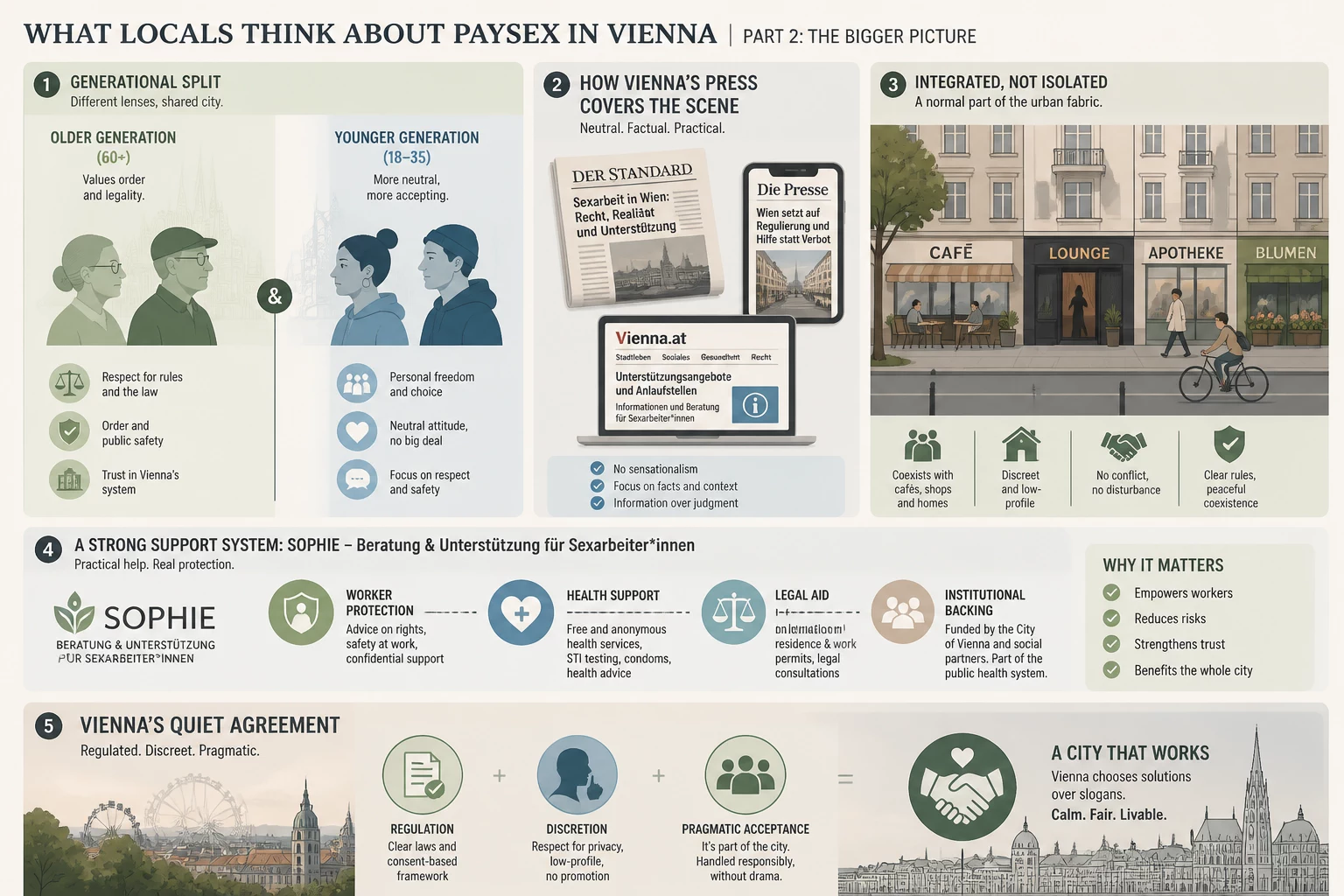
Vienna’s age groups view the adult scene differently. Older residents who lived through unregulated years see the current system as progress and evidence of managed order. They might not engage personally, but see it as proof that Vienna has managed something other cities cannot. Younger Viennese treat the scene as simply one part of a diverse city, neither remarkable nor troubling. Some work in it; others have no connection to it whatsoever. Legal sex work information is now standard education rather than moral debate. The shift is from seeing the scene as something requiring moral resolution to accepting it as fact of urban life.
Media, neighbourhoods, and integration
Viennese media coverage of the sex scene is notably restrained. You won’t find sensationalist stories or hand-wringing editorials. Local press treats developments in Vienna’s adult scene with the same tone used for restaurant openings or city planning. Occasional stories cover regulation changes or labour matters, framed as practical issues rather than moral questions. This measured approach shapes how residents think. Venues integrate smoothly into neighbourhoods because residents don’t organise against them. Discreet evening planning in Vienna is possible because venues operate responsibly and neighbours accept them. The seasonal changes in Vienna’s adult scene demonstrate how venues adapt to broader urban rhythms without friction.
Pragmatism as Vienna’s answer
Vienna’s approach to sex work reflects a quiet agreement about how the city functions. This isn’t celebration or endorsement but something more fundamental: a pragmatic acceptance that adult venues, when properly regulated, belong in a city. The SOPHIE counselling centre for sex workers offers insight into actual support structures and worker protections. That locals accept funding for these services suggests pragmatic tolerance has institutional backing. Understanding Vienna’s landscape requires looking past rhetoric to how the city actually behaves. That behaviour is remarkably consistent: regulation, discretion, and acceptance that this is how things work.